What You Actually See on the Flight of Angels
The Flight of Angels lasts about 13 minutes, and if you have never done it, that number is hard to picture. Is it a quick loop and back? A long cruise? What actually fills those minutes? This is a walkthrough of what you see and when, from the moment the rotor spins up to the moment you step back onto the tarmac, so you know exactly what you are booking.
The name comes from David Livingstone, who wrote in 1855 that scenes so lovely must have been gazed upon by angels in their flight. The modern helicopter flight borrowed the line, and once you are in the air looking down at the falls, it stops feeling like marketing.
Before You Lift Off
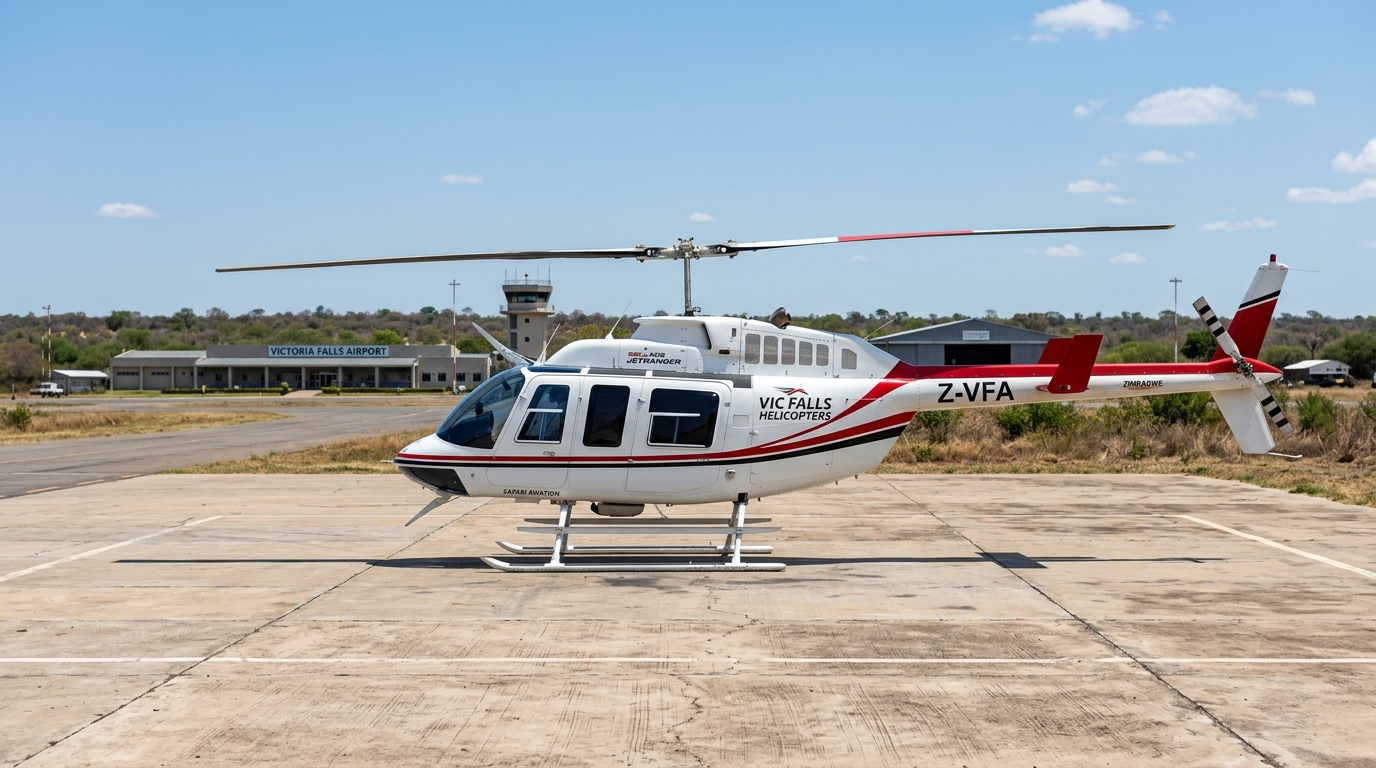
The experience starts on the ground, and it is quicker than you expect. You are weighed, which every operator does so the pilot can balance the aircraft and decide seating. There is a short safety briefing covering seatbelts, headsets and how to get in and out. Then you walk to the helicopter, usually a Bell 206 JetRanger on the Zimbabwe side, climb in, buckle up, and put on a headset so you can hear the pilot over the engine.
From here it moves fast. The engine note climbs, the rotor spins up to speed, and the ground drops away with that slightly surreal, elevator-smooth lift that a helicopter does and a plane never quite matches. Within a minute you are up and turning towards the falls.
The Approach: The First Sight of the Spray
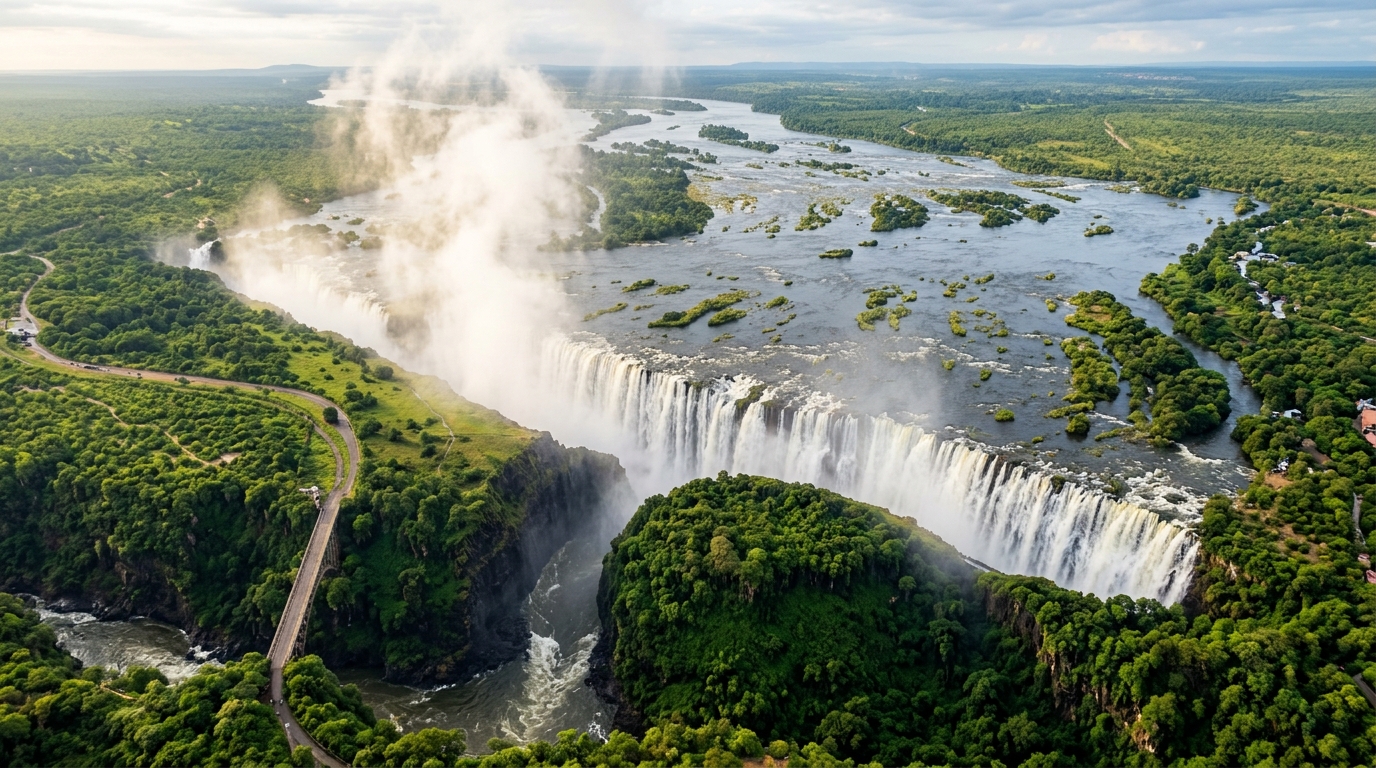
The first thing you notice is not the falls. It is the spray. Long before you are over the water, you see the mist rising off the gorge, a tall white column that in high water can climb higher than the helicopter itself. Locally it has been called the smoke that thunders for good reason, and from the air you understand the name in a way no photo conveys. The pilot lines up the approach, and the falls resolve out of the mist ahead of you.
Then the scale hits. On the ground you see the falls in sections, framed by trees and often half-hidden by their own spray. From the air the whole 1,708-metre width appears at once, a single unbroken line of water dropping into the gorge. That first complete view is the moment most people go quiet.
The Figure-Eight: Why Everyone Gets the View
This is the heart of the flight, and it is cleverly designed. The pilot flies a figure-eight over the falls, crossing back and forth several times and banking the helicopter each way. That banking is deliberate. It tips the cabin so the passengers on each side get a clear, downward look at the water, then swings the other way so the other side gets the same. Nobody spends the flight staring at a rotor or a wing. Over the course of the passes, both sides see the main event properly.
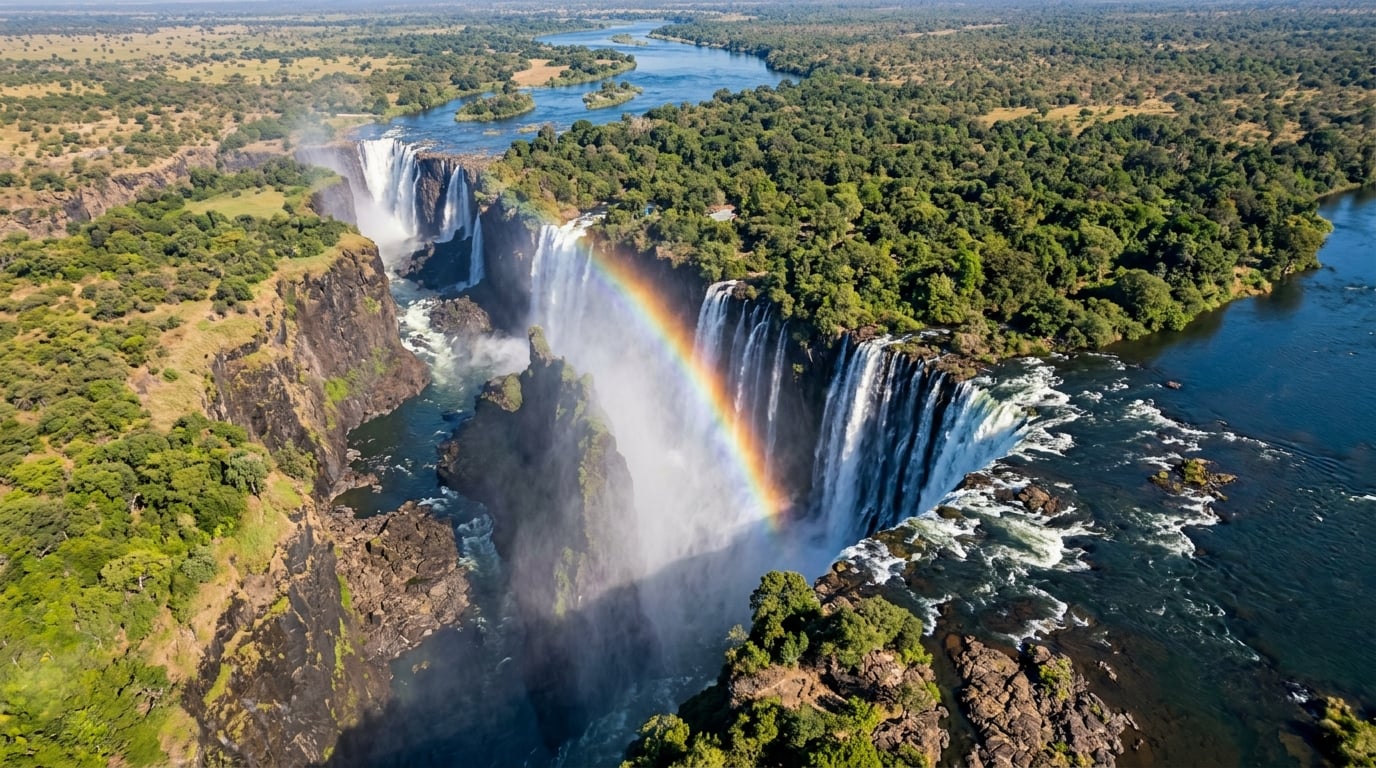
On each pass you pick out something new. The Devil’s Cataract at the western end, the Main Falls in the centre, the Rainbow Falls, and the Eastern Cataract over on the Zambia side. On a sunny day with the right angle, a rainbow sits in the spray, sometimes a full arc, occasionally a double. Because the light and your position keep changing, the rainbow appears and vanishes as you circle, which is part of why people take far more photos than they mean to.
Looking Down: The Zambezi and the Lip
Between passes over the falls, look upstream. The Zambezi River spreads out wide and calm above the falls, dotted with small islands and channels, giving no hint of what is about to happen to it. Then it reaches the lip and simply drops off the edge of the world into the gorge. Seeing the calm river and the violent drop in a single glance is one of those perspectives you only get from above.
You also see the two towns and the bridge. The Victoria Falls Bridge spans the gorge between Zimbabwe and Zambia, and if you look closely you can sometimes spot bungee jumpers dropping off it. The town of Victoria Falls sits on the Zimbabwe side, Livingstone further back on the Zambia side, and from the air the whole geography of the place finally makes sense.
The Gorge: The Underrated Part
People book the Flight of Angels for the falls, but the Batoka Gorge below is the part that surprises them. Downstream of the falls, the river does not run straight. It zig-zags violently through a series of sharp switchback canyons, because over hundreds of thousands of years the falls have retreated upstream, carving a new gorge at each stage. From the air you see this whole staircase of ancient gorges laid out below you, dark basalt walls dropping to the green-brown river far below.
In low water especially, when the spray thins out, the gorge becomes the star of the show. You can trace the river as it threads through the canyons and understand the raw geological force that built the entire landscape. It is a different kind of beauty from the falls themselves, more about structure and time than sheer volume.
Does 13 Minutes Feel Long Enough?
Honestly, it feels short, but not short-changed. There is no dead time. You do not spend five minutes transiting out to the falls and five coming back. You lift off, you are over the water within a minute, you stay there circling, and then you turn for home. The whole flight is dense with things to look at, which is exactly why it goes so quickly. For perspective, a bungee jump off the bridge lasts about 10 seconds for around USD 160. Set against that, 13 continuous minutes over the falls is a lot of experience per dollar.
If you already suspect 13 minutes will not be enough, most operators offer a longer 22 to 25 minute flight that adds more of the gorge and a pass over the Zambezi National Park, where you have a real chance of seeing elephant or hippo from the air. That is a genuine upgrade rather than just more of the same.
The Landing, and What Stays With You
The return is quick. The pilot turns away from the falls, the mist shrinks behind you, and within a minute or two you are settling back onto the helipad with that same smooth vertical descent. You climb out, hand back the headset, and almost everyone stands around for a moment grinning and scrolling back through their photos.
What tends to stay with people is not a single sight but the sense of scale, the way the falls only make sense as one enormous whole when you see them from above. That is the thing the ground cannot give you, and it is the real reason the flight is worth doing. A piece of advice, though: do not spend all 13 minutes behind a screen. Get a few shots early, then put the camera down and just watch. That is the part you will actually remember.
Ready to See It for Yourself?
Read the full guide to the Flight of Angels, then compare flights and book the one that suits you.