Is a Victoria Falls Helicopter Flight Safe? What to Know
If you are nervous about small aircraft, a helicopter flight over Victoria Falls can feel like a big leap. It is a fair thing to think about. Here is a grounded look at how safety actually works here, what the rules are, why some of the procedures feel the way they do, and what is worth checking before you book, without either downplaying the risk or dressing it up.
The Honest Short Answer
Scenic helicopter flights at Victoria Falls are a long-established, heavily regulated commercial activity that thousands of visitors do every year. No form of flight is entirely without risk, and it would be dishonest to claim otherwise. But these are professional operations flying certified aircraft under aviation authority oversight, not casual joyrides, and the safety procedures you will encounter exist precisely to keep the risk low.
Who Regulates the Flights
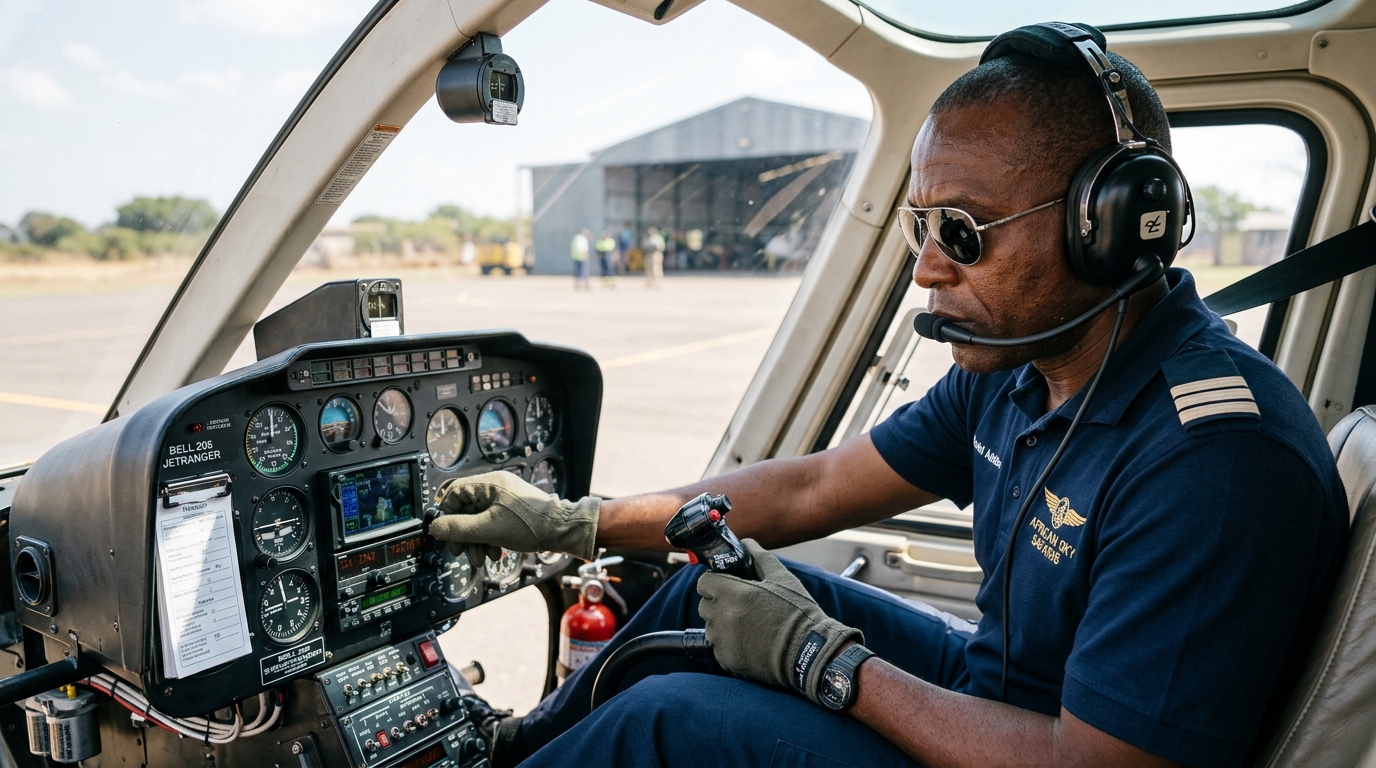
Commercial aviation in Zimbabwe falls under the Civil Aviation Authority of Zimbabwe, or CAAZ. Its job includes certifying operators, aircraft and personnel, overseeing airworthiness, issuing flight permits and enforcing operational compliance. In plain terms, an operator cannot simply buy a helicopter and start selling scenic flights. The aircraft has to be maintained to standard, the pilots have to be licensed, and the operation has to meet the regulator’s requirements. Zambia has its own equivalent civil aviation authority overseeing operators on the Livingstone side.
The established operators lean on this. Zambezi Helicopter Company, which says it has flown here since 1996, describes maintenance standards connected with the aircraft manufacturer and recognised aviation bodies. A long track record and manufacturer-linked maintenance are not a guarantee of anything, but they are meaningful signals that an operation takes its obligations seriously.
Why They Weigh You: Weight and Balance
The first thing that surprises many passengers is being asked their weight, or being stood on a scale. It can feel awkward, so it helps to understand that this is one of the most important safety steps of the whole day. A helicopter is sensitive to how weight is distributed. The pilot uses individual passenger weights to decide who sits where, balancing the aircraft front to back and side to side. Total payload also determines whether the helicopter can safely fly the planned profile in the day’s conditions.
Operators publish per-passenger weight limits, commonly around 120 kg, though it varies. Bonisair, for example, lists a maximum of 125 kg and notes that a heavier passenger may need to book an additional seat or be rescheduled. If your weight is near a published limit, say so when you book rather than at the helipad. It is never a personal judgement. It is physics, and the operator having accurate numbers is what keeps the aircraft balanced.
Weather: Why Flights Get Delayed or Cancelled
Helicopter flights at Victoria Falls are weather-dependent, and a good operator treats that as non-negotiable. Wind, storms and poor visibility can all ground a flight or push it to later in the day. During the rainy season, afternoon build-ups are common, which is one reason morning slots are often more reliable.
If your flight is delayed or scrubbed for weather, that is the system working, not failing. A pilot who declines to fly in marginal conditions is exactly the pilot you want. The practical lesson is to book your flight early in your stay rather than on your last afternoon, so that if weather forces a reschedule, there is still room in your trip to fit it back in.
Minimum Passenger Numbers
Some operators, particularly on the Zambia side, run aircraft with minimum passenger requirements, often three or four depending on the helicopter. United Air Charter, for instance, flies EC130 and EC120 aircraft with aircraft-specific minimums. This is partly commercial and partly about how the aircraft is balanced and loaded. For you it mostly means a very small party might occasionally wait for the flight to fill, or be moved to another departure. It is worth asking about if you are travelling solo or as a couple and are working to a tight schedule.
The Aircraft
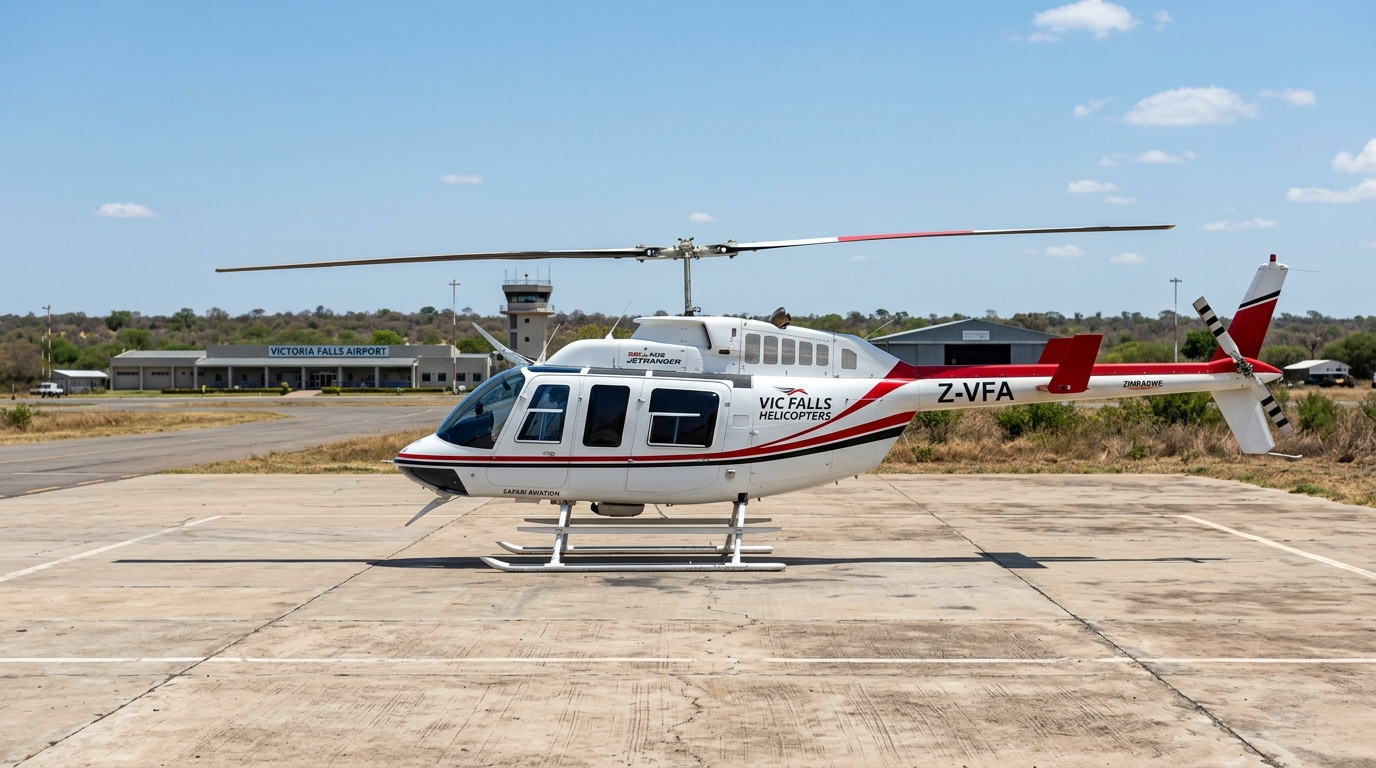
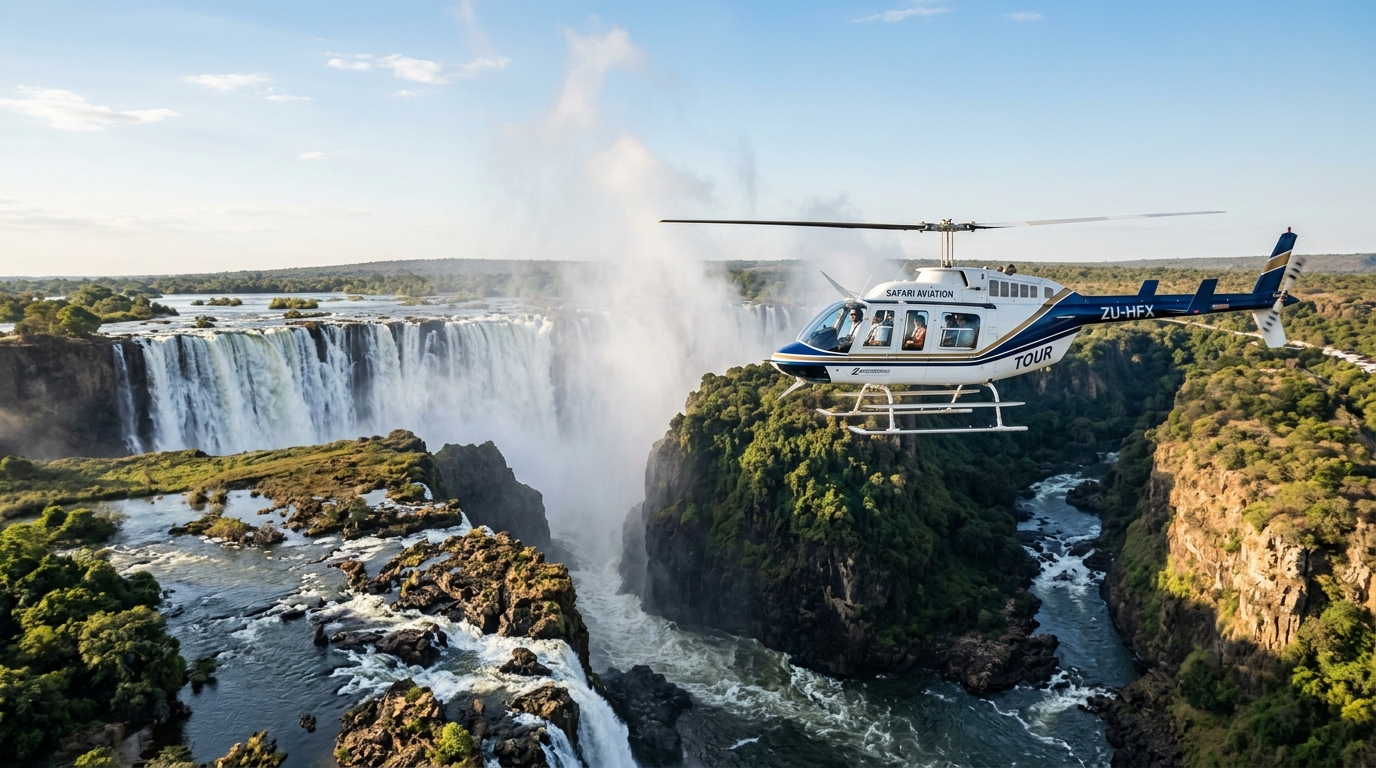
The helicopters flown here are proven scenic-tour types. On the Zimbabwe side you will usually fly a Bell 206 JetRanger or LongRanger, workhorses of the sightseeing world with a long service history. On the Zambia side, United Air Charter flies the more modern Eurocopter EC130 and EC120. These are not experimental machines. They are the same families of aircraft used for scenic flights all over the world, which is part of why parts, maintenance and pilot experience are readily available.
What Turbulence and the Ride Feel Like
For a first-timer, the ride itself is usually gentler than expected. The take-off and landing are smooth vertical movements rather than the acceleration of a plane. In the air the banking during the figure-eight is deliberate and controlled, not sudden. You may feel some light bumps, especially on warm afternoons when the air off the gorge is more active, but it is generally mild. If you are prone to motion sickness, a morning flight in calmer air and a light meal beforehand tend to help.
Questions Worth Asking Before You Book
You do not need to interrogate an operator, but a few questions signal a serious booking and get you useful information:
- Is the operator licensed by the relevant civil aviation authority? Established operators will answer this readily.
- What happens if weather cancels the flight? Look for a clear reschedule or refund policy rather than a vague answer.
- What is the passenger weight limit, and how are weights handled? A straight answer here is a good sign.
- What aircraft will I be flying in? Knowing the type tells you what to expect from the cabin and the ride.
- What are the cancellation terms if I need to change plans? Many flights are non-refundable inside 24 hours, so know this in advance.
Booking Through a Reputable Channel
One simple way to protect yourself is to book through an established channel rather than an unknown reseller offering a price that looks too good. Reputable booking platforms list the operator, show the aircraft and duration, and set out clear cancellation terms, often free cancellation up to 24 hours before departure. That transparency is itself a safety feature, because it means you know who is flying you and under what terms before you pay.
The Bottom Line
A helicopter flight over Victoria Falls is a regulated, professionally run activity with sensible safety procedures built in at every step, from the scale you stand on to the pilot’s weather call. The procedures that can feel fussy in the moment, the weighing, the briefings, the occasional weather delay, are the very things that make it safe. Book with an established operator through a reputable channel, be honest about weights, and give yourself a spare day in case the weather has other ideas. Do that, and you can climb in and simply enjoy one of the great views on earth.
Fly With Confidence
Compare established operators, aircraft and prices, then book the flight that is right for you.